
The Path from Diversity to Innovation
The Wisdom of CrowdsThis thread tracks how varied experiments generate alternatives and how markets, imitation, and selection determine which ideas endure.
increasing Bearing strength in each event
 decreasing
Bearing strength in each eventdecreasingMany Cars, Many Guesses
An Industry Without a Template
Competing Designs
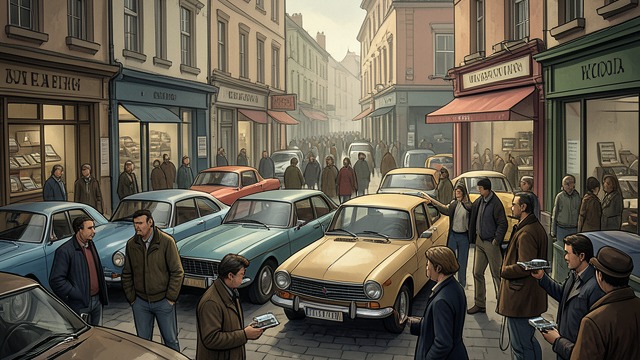
The early American automobile industry contained hundreds of firms and competing ideas. Steam, electric, and gasoline power all had advocates, while no settled definition of the car yet existed.
That profusion looked wasteful: many companies would fail, and the eventual winner was not guaranteed to be the best design in every respect. Still, the variety allowed different technologies and business methods to be tried.
Experiment Before Selection
The book compares this early industry to scouts searching for unknown sources of nectar. Before a crowd can choose among alternatives, someone has to discover or invent them.
Innovation therefore needs room for speculative experiments, not merely a central authority attempting to identify a winner in advance.
The Curved-Dash Survivor
The Prototype That Survived
Fire and Fortune
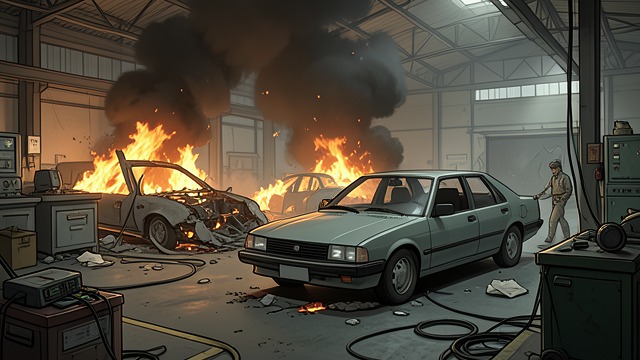
Ransom E. Olds built multiple prototypes while Samuel Smith favored expensive cars and Olds leaned toward a lower-cost model. A factory fire destroyed nearly all the prototypes except the light, inexpensive one near the door.
The accident pushed Olds toward immediate production of the surviving design, later called the Curved-Dash Olds. Its accessible price and publicity helped it reach a much wider market.
A Breakthrough with Limits
The company sold more cars than any other American manufacturer in 1903. Olds had found a product and production approach that suited a nascent mass market.
Yet success did not guarantee his control of the company or lasting dominance. The episode shows how experimentation can create opportunity while chance and organizational conflict shape who benefits.
The Market Narrows the Field
Selection After Experiment
Production Advantages
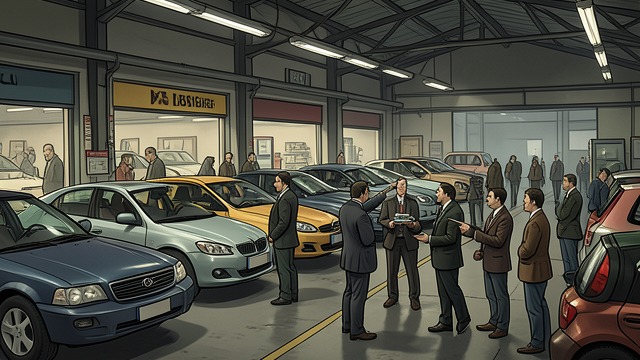
Gasoline-powered cars gained ground as manufacturers invested in mass production and standardized components. Olds bought parts from outside makers, Cadillac standardized components, and Henry Ford built around a moving assembly line.
The outcome emerged over time rather than from one decision-maker comparing every alternative at once. Companies and technologies were tested through consumer demand and organizational capability.
Winners and Abandonment
Hundreds of firms disappeared or were acquired, and the industry converged around a narrower vision of the automobile. The messiness of this process was also its capacity to discover what could work.
The book’s lesson is not that markets always select the best option, but that systems can be good at producing alternatives and eliminating failures.
The Bees’ Search Strategy

Scouts and Waggle Dances
Finding Unknown Alternatives
Honey bees do not collectively inspect a map of every food source before acting. Scouts search in different directions and return with signals about the value of the nectar they have found.
The vigor of a waggle dance helps attract more foragers to promising sites. Less attractive sources draw fewer followers, allowing the colony to distribute effort across alternatives.
Discovery Before Judgment
This method addresses a different problem from choosing among known answers. The colony must first uncover possibilities, then allocate attention among them.
The analogy helps explain why innovation benefits from many independent searches. A system that tries to avoid all failed experiments may also prevent the discovery of an unexpectedly valuable option.
Kill the Losers Quickly
Failure as a System Cost
Many Attempts
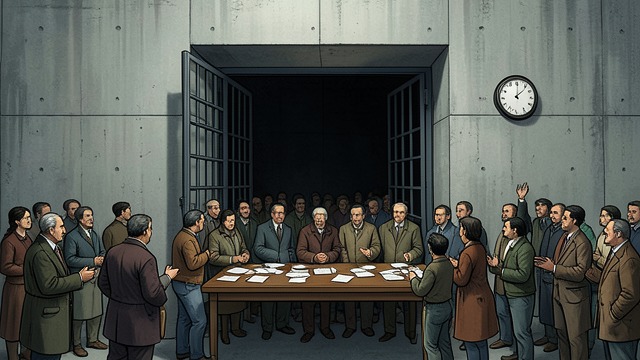
Jeff Bezos compared the Internet boom to the Cambrian explosion: extraordinary variety came with widespread extinction. The book uses the comparison to argue that large numbers of failures can accompany a system capable of producing breakthroughs.
No organization can reliably know in advance which proposals will become successful products. A tidy selection process may simply preserve familiar ideas and reject unfamiliar ones too early.
Select After Experiment
The more useful capacity may be to recognize failures and stop funding them before they consume too many resources. That is not the same as celebrating waste; it is a way to make uncertainty manageable.
The thread resolves in a practical principle: allow diverse proposals to emerge, then use evidence and feedback to decide which deserve to continue.
The first decade of the twentieth century
1901 to 1903
From the 1900s to World War I
The chapter 2 discussion of bee foraging
The chapter 2 conclusion on industrial selection
